
Hyperbaric oxygen therapy (HBOT): pressing oxygen into tissue that is short of it
Division of Pulmonary Medicine, Taipei Veterans General Hospital Hsinchu Branch · Wellness treatments
Related pagesClinical pathway: classifying the indication and the NHI review (中文)Wellness treatments overview
A man of 68 with diabetes had an ulcer the size of a coin on the inner side of his ankle. The dressings had been changed for more than four months and it still had not healed. The skin around the wound felt cold, and the pulse on the top of his foot was hard to find. The surgeon said: “However well the debridement is done, if blood and oxygen cannot get there, the wound will not heal.”
Once angiography had confirmed that the blood flow could still be improved, and the vascular intervention had been done, he started hyperbaric oxygen therapy, five times a week. After the tenth session, pink new granulation tissue began to appear at the edge of the wound; by the thirtieth, the ulcer had shrunk to less than a third of its original size.
Hyperbaric oxygen is not magic. It did not open up his arteries, and it did not cure his diabetes. What it did was very simple: for those two hours of each treatment, it let oxygen bypass the blocked vessels by dissolving instead, and diffuse straight down to the base of the wound — and that was precisely the piece of the puzzle the healing was missing.
What is hyperbaric oxygen actually doing?
When we breathe air normally, almost all the oxygen is carried by the haemoglobin inside red blood cells — and under normal conditions haemoglobin is already close to saturation. So simply putting on an oxygen mask can only deliver a limited amount of extra oxygen.
Hyperbaric oxygen takes a different route. By Henry’s law, the amount of a gas that dissolves in a liquid is proportional to the pressure. When someone breathes close to 100% oxygen inside a chamber at 2.0–2.5 atmospheres absolute (ATA), the oxygen dissolved in the plasma rises to more than ten times the usual amount. Oxygen dissolved in the plasma does not need red blood cells to carry it: it can diffuse into poorly perfused tissue by itself.
Four clinical effects follow from this
- It raises tissue oxygen tension: at the base of an ischaemic wound the oxygen tension is often too low for collagen to be made at all. Hyperbaric oxygen brings it back into the range where repair is possible, and encourages new blood vessels to grow in.
- It strengthens bacterial killing: white cells need oxygen to produce the free radicals with which they kill bacteria, which is why immunity is particularly poor in a hypoxic area. Hyperbaric oxygen also suppresses anaerobic organisms and increases the effect of some antibiotics (aminoglycosides, for instance).
- It speeds the clearance of harmful gases: in carbon monoxide poisoning, hyperbaric oxygen shortens the half-life of carbon monoxide bound to haemoglobin from several hours to about 20 minutes; in decompression sickness and gas embolism it also compresses bubbles and speeds their dissolution.
- It reduces tissue oedema: a high concentration of oxygen makes blood vessels constrict moderately, which lowers blood flow — but because the oxygen content rises so much, total oxygen delivery actually increases. That matters particularly where there is swelling, as in crush injury and burns.
Which uses are internationally accepted?
Every few years the Undersea and Hyperbaric Medical Society (UHMS) reviews and publishes a list of approved indications. Only for the uses on that list is there enough evidence that hyperbaric oxygen is “treatment” rather than “trying something”.
| Category | Indication | Role |
|---|---|---|
| Acute | usually needs immediate, consecutive treatment | ||
| Poisoning | Carbon monoxide poisoning (including with cyanide poisoning) | First line |
| Bubbles | Decompression sickness, arterial gas embolism | First line, with no substitute |
| Infection | Gas gangrene (clostridial myonecrosis), necrotising soft tissue infection | Adjunct to surgery and antibiotics |
| Circulation | Acute traumatic ischaemia, crush injury and compartment syndrome, severe anaemia (where transfusion is not possible) | Adjunct |
| Eye and ear | Sudden sensorineural hearing loss, central retinal artery occlusion | Together with steroid treatment |
| Wounds | A flap or skin graft at risk of dying, thermal burns | Adjunct |
| Intracranial | Intracranial abscess | Adjunct |
| Chronic | usually arranged as many sessions over a long period | ||
| Wounds | Wounds that will not heal, such as the diabetic foot (where hypoxia has been confirmed) | Adjunct; blood flow and infection must be dealt with first |
| Radiation | Osteoradionecrosis, soft tissue necrosis, haemorrhagic cystitis, radiation enteritis | The evidence here is relatively clear |
| Bone | Refractory osteomyelitis | Adjunct |
| Special | Selected chronic hypoxic ulcers (where assessment has confirmed hypoxia) | Adjunct |
Taiwan’s National Health Insurance (NHI) has explicit conditions for covering hyperbaric oxygen and explicit prior-review rules, and not every accepted indication falls within what is covered. For the detail of how the category is decided and how it maps onto the NHI codes, use the hyperbaric oxygen tool in the clinical pathways (中文).
Anti-ageing and wellness: where has the research actually got to?
In recent years hyperbaric oxygen has often been packaged as an “anti-ageing course”. That deserves to be set out separately and plainly, because the strength of the evidence is not remotely in the same class as the table above.
The 2020 telomere study: interesting, but not the same as “getting younger”
Efrati’s group in Israel published a prospective trial in Aging: 35 healthy older people aged 64 and over, living independently and without disability, had 60 sessions of hyperbaric oxygen, after which the immune cells isolated from their blood showed an increase in telomere length of more than 20% (most marked in B cells, which rose by about 37% after the course), while the proportion of senescent T cells fell.
This was the first time hyperbaric oxygen had been seen to change markers of ageing at the cellular level in people without disease, and that genuinely is interesting. But before treating it as grounds for anti-ageing use, several things have to be seen clearly:
- This was a single-arm trial with no control group, so natural variation and measurement error cannot be excluded.
- There were only 35 participants: a small sample with wide variation (for some of those percentages the standard deviation was larger than the mean).
- Telomere length and senescent cells are surrogate markers. There is still a long way between them and actually living longer or in better health, and at present no study shows that having hyperbaric oxygen lengthens life or lowers mortality.
- Sixty sessions is a considerable investment of time and money.
In the same way, the use of hyperbaric oxygen for exercise recovery, chronic fatigue, long COVID, brain fog, autism and dementia rests at present mostly on small studies or case series, and has not yet accumulated to the point where it can be recommended to people in general. If it is for one of these reasons that you are considering hyperbaric oxygen, you should understand it as “trying something” rather than as treatment, and set out in advance how many sessions you will have, what measure will tell you whether it is working, and when you will stop if it is not.
How is a course of treatment run?
| Item | Usual arrangement |
|---|---|
| Pressure | Most courses use 2.0–2.5 ATA (equivalent to 10–15 metres under water) |
| Time per session | About 90–120 minutes, including pressurisation, treatment and decompression |
| How the oxygen is given | Pure oxygen breathed through a mask or hood, with “air breaks” in between to lower the risk of oxygen toxicity |
| Number of sessions | A few to a dozen or so for acute problems; chronic wounds and radiation injury often need 20–60 |
| Frequency | For chronic indications, usually 5 times a week |
| What happens during treatment | You lie or sit, and can listen to music or talk to the therapist over the intercom. During pressurisation and decompression you need to equalise your ears actively (swallow, or pinch your nose and blow) |
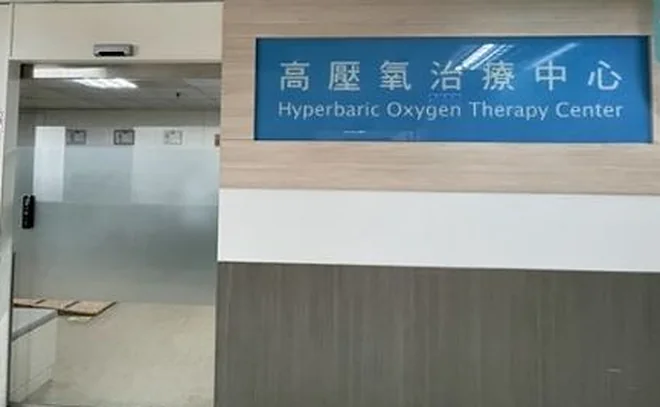
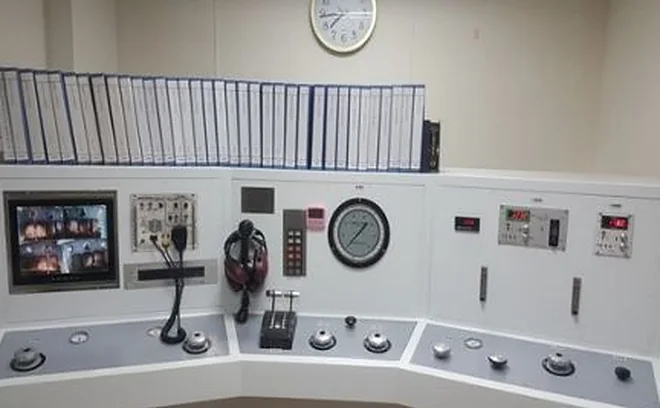

During treatment you wear a mask or hood to breathe pure oxygen. Pressurisation and decompression each take about 10–15 minutes; the rest of the time you simply sit and rest — you can chat or listen to music.
The thing that most needs saying is about your ears. In the first few minutes of pressurisation the pressure difference across the eardrum is greatest, so if you have a cold with a blocked nose, or your Eustachian tube is not clear, ear barotrauma is easy to cause. Do tell the staff before treatment if you have a cold or your nasal allergy is flaring; a decongestant first, or postponing the session, may be needed.
When it must not be done, or something has to be dealt with first
Absolute contraindication
An untreated pneumothorax is the only absolute contraindication. As the chamber decompresses the gas inside expands, which can turn a simple pneumothorax into a fatal tension pneumothorax. Once a chest drain has been placed and it has been dealt with, treatment is still possible.
- Particular chemotherapy drugs: in anyone on bleomycin, hyperbaric oxygen may worsen lung toxicity; doxorubicin and cisplatin are also listed as needing careful assessment. Do tell the team what you are taking.
- Severe chronic obstructive pulmonary disease with carbon dioxide retention, or large bullae in the lung: there is a risk of gas trapping and of pneumothorax, so imaging assessment is needed.
- Uncontrolled epilepsy: pure oxygen under pressure lowers the seizure threshold.
- Upper respiratory tract infection, sinusitis, poor Eustachian tube function, recent ear or sinus surgery: treat these first, then book.
- Claustrophobia: in a multi-person chamber a member of staff can be with you; a single-person chamber brings it on more readily, so assessment and desensitisation beforehand are needed.
- Pregnancy: generally not advised for non-emergency indications; life-threatening situations such as carbon monoxide poisoning are a different matter.
- Implanted medical devices (pacemaker, implantable defibrillator, insulin pump, cochlear implant and so on): the pressure rating for that particular model has to be confirmed.
- Uncontrolled high fever: this raises the risk of a seizure, so the fever should be brought down first.
Common side effects
- Middle ear barotrauma: the commonest, felt as pressure or pain in the ear. The great majority are mild and recover; learning to equalise your ears reduces it greatly.
- Sinus pain: more likely when your nose is blocked.
- Temporary worsening of short-sightedness: this can appear after a long course (several dozen sessions), and usually recovers by itself within weeks to months of stopping treatment. Do not rush to be fitted with new glasses while the course is going on.
- Oxygen toxicity seizure: rare (well under 1 in 1,000). The air breaks built into the course are there to prevent it.
- Tiredness: some people feel particularly tired early in a course, and mostly get used to it.
Common questions
Is this the same as using an oxygen concentrator at home?
Not at all. A home oxygen concentrator raises the oxygen concentration at one atmosphere, so the increase in oxygen dissolved in the plasma is limited. The whole point of hyperbaric oxygen is the pressure — without pressurisation there is no ten-fold-plus rise in dissolved oxygen, and so no ability to drive oxygen by diffusion into ischaemic tissue. The “high-concentration oxygen bars” found commercially are likewise not hyperbaric oxygen therapy.
Will one session do the job?
For acute problems (carbon monoxide poisoning or decompression sickness, say), the first treatment is decisive. But for indications such as chronic wounds and radiation injury, the mechanism is the promotion of new blood vessels and collagen synthesis, which inherently takes time to build up, and it usually takes until somewhere between the tenth and the twentieth session before a change can be seen. Breaking off part-way through mostly wastes the sessions already done.
Is it uncomfortable or stuffy inside the chamber?
During pressurisation and decompression your ears feel as they do on an aeroplane, and you need to equalise them actively. There is an intercom in the chamber, most have audio-visual equipment, and a therapist watches throughout. If you are inclined to claustrophobia, say so beforehand; a multi-person chamber is usually easier to get used to than a single-person one.
Does the NHI cover it?
Some indications are covered by the National Health Insurance (NHI), with explicit review conditions, and for some items prior approval has to be obtained from the insurer case by case. Uses outside what is covered — purely for wellness or anti-ageing, for example — are self-paid. It is worth confirming with the medical team before booking which category your situation falls into; the hyperbaric oxygen assessment tool in the clinical pathways (中文) lets you check this quickly.
I only want it as “maintenance”. Can I have it?
It can be discussed, but please put your expectations in the right place first. At present no high-quality study shows that hyperbaric oxygen makes healthy people live longer or in better health; the telomere study is interesting, but the sample was small, there was no control group, and what it looked at was only a surrogate marker. If you do decide to try it, agree with your doctor beforehand on a maximum number of sessions, what you will measure and when you will stop, so that it does not go on indefinitely.
References
- Moon RE, editor. Hyperbaric oxygen therapy indications. 14th ed. North Palm Beach (FL): Undersea and Hyperbaric Medical Society.
- Undersea and Hyperbaric Medical Society. UHMS approved indications for hyperbaric oxygen therapy. Available from: https://uhms.org/
- Hachmo Y, Hadanny A, Abu Hamed R, et al. Hyperbaric oxygen therapy increases telomere length and decreases immunosenescence in isolated blood cells: a prospective trial. Aging (Albany NY). 2020;12(22):22445-22456.
- Weaver LK. Clinical practice. Carbon monoxide poisoning. N Engl J Med. 2009;360(12):1217-1225.
- 衛生福利部中央健康保險署. 全民健康保險醫療服務給付項目及支付標準——高壓氧治療相關條文(59002B–59016B). Available from: https://www.nhi.gov.tw
References follow the ICMJE (Vancouver) style. Guidelines and official documents are given with their version or year of publication; legislation and National Health Insurance (NHI) rules are given with the responsible authority and the version date. Last checked: 8 October 2026.
Service information at this hospital
What follows is the usual arrangement. The number of sessions and the time per session are the ranges commonly seen in practice, not a promise to any individual patient; the indication, the number of sessions and the cost that actually apply to you depend on assessment in the outpatient clinic and on this hospital’s latest announcements.
- Where it is done
- The hyperbaric oxygen centre; assessment and follow-up in the chest medicine outpatient clinic
- Hours
- Weekdays 08:30–16:30
- Time per session
- Including pressurisation and decompression, about 90–120 minutes
- Suggested number of sessions
- This varies a great deal with the indication. Acute problems (carbon monoxide poisoning, for instance) may need only a few sessions; chronic wounds and radiation tissue injury commonly need 20–40, mostly five a week. The actual number is decided by the doctor according to your condition and your response to treatment.
- Cost and coverage
- Where the indication meets the NHI criteria it is covered by the NHI, and some items need prior review; where it does not, it is self-paid. Please ask about the actual cost in the clinic.
- How to book
- After assessment in the outpatient clinic, the doctor issues a treatment order and a slot is arranged.
- Preparing for treatment
- Before treatment, tell the staff about all your medicines and any implants. Do not take a lighter, a hand warmer, or alcohol-based or oily cosmetics and skincare into the chamber. If you have a cold, a blocked nose or a blocked Eustachian tube, say so first — the risk of ear barotrauma is higher.
- Contact
- Taipei Veterans General Hospital Hsinchu Branch 03-596-2134 (ask for the treatment unit)
This content is health information. It is for reference only and cannot replace a professional medical diagnosis. Whether this treatment is right for you, and how a course should be arranged, must be decided by a doctor after assessing your individual situation. All of the working behind the interactive tools on this page is done on your own device; your answers are not uploaded and are not stored. This site records only anonymous usage statistics (for example, how many people read this page to the end, how many complete a self-assessment, and which band the result falls into). It does not include what you answered, and it sets no cookies. See the privacy notice for details.
Still have questions? Add Dr. Hwa-Yen Chiu’s LINE official account @chiubreath for clinic news and updates on respiratory health.
Add on LINE