
Longevity & Recovery
Wellness treatments
This hospital offers five non-drug, non-surgical treatments: hyperbaric oxygen therapy, intravenous laser, external counterpulsation, repetitive transcranial magnetic stimulation and acupuncture. What they have in common is that they use physical means to improve blood flow, oxygen supply and nerve signalling — rather than adding yet another tablet.
The point of this section is not to sell you a course of treatment. It is to let you see plainly how much evidence there is behind each one, who it suits and who it does not. Every page states honestly which indications are internationally accepted and which are only inferred, which are covered by the National Health Insurance (NHI) and which you pay for yourself, and when the treatment must not be done.
- 5 treatments
- Evidence strength graded and labelled
- Contraindications screened out automatically
- Interactive self-assessment tools
- Your answers are not uploaded and not kept
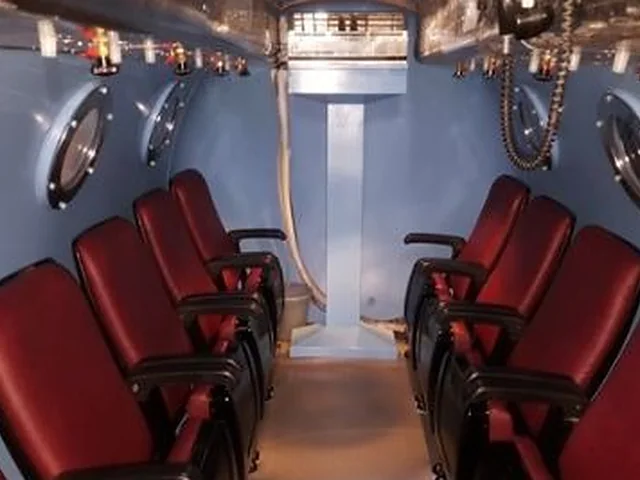
Hyperbaric oxygen therapy
Hyperbaric Oxygen Therapy · HBOT
You breathe high-concentration oxygen inside a pressurised chamber, so that a large amount of oxygen dissolves directly into the plasma and reaches tissue with poor blood supply and low oxygen, helping wounds heal and fighting infection.
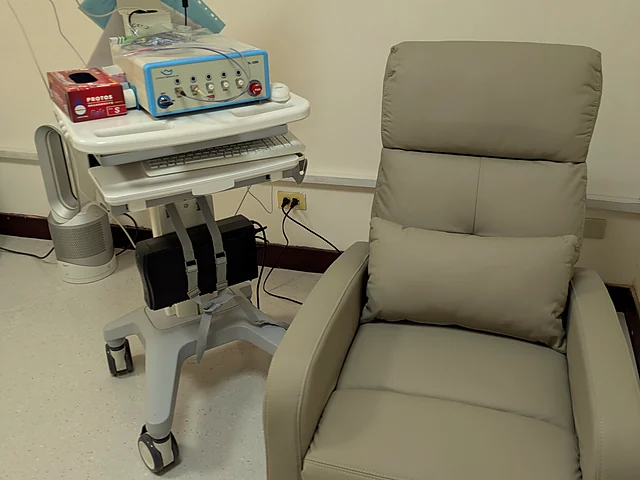
Intravenous laser
Intravascular Laser Irradiation of Blood · ILIB
Red laser light at very low energy is shone on the blood. It is thought that this may increase mitochondrial energy production, promote the release of nitric oxide and reduce inflammation; it is often used as an adjunct in chronic fatigue and neuropathy.
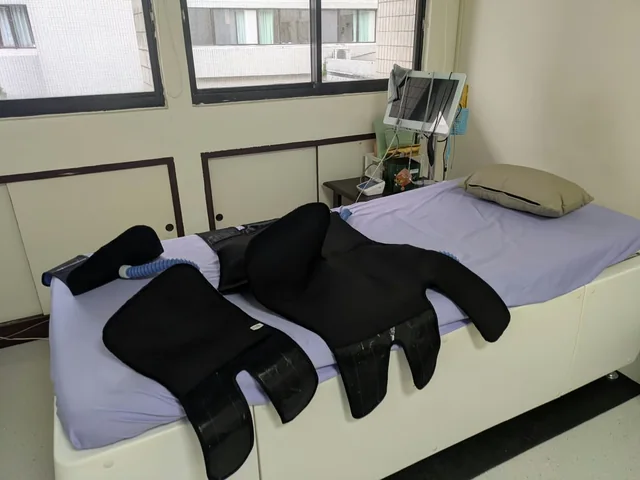
External counterpulsation
Enhanced External Counterpulsation · EECP
Pneumatic cuffs, timed to the ECG, squeeze the legs from the bottom upwards while the heart is in diastole, pushing blood back towards the heart to improve coronary perfusion and endothelial function.
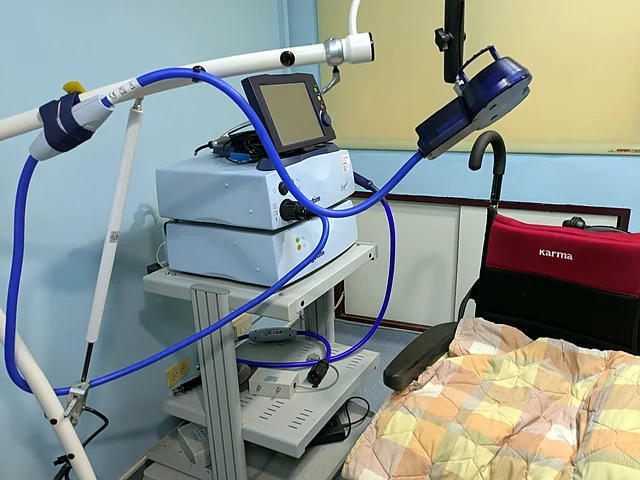
Repetitive transcranial magnetic stimulation
Repetitive Transcranial Magnetic Stimulation · rTMS
A magnetic field induces electrical currents in the brain through the scalp, adjusting the activity of particular brain regions. In Taiwan it is approved for adults with major depression that has not responded well to treatment.
Acupuncture
Acupuncture
Fine needles stimulate particular acupuncture points, modulating nerve conduction and the body’s own pain-relieving system. Of the five, it is the only one that is covered by the NHI, and it also has the richest evidence base.
The five treatments at a glance
What follows is a quick comparison; for the detail and the limits, go into each page. “Evidence strength” refers to the level of evidence for the indication that treatment has most evidence for. It does not mean that every use is equally reliable.
| Treatment | How it works | Use with the strongest evidence | Evidence strength | Time per session | Typical course | Coverage in Taiwan |
|---|---|---|---|---|---|---|
| Hyperbaric oxygen (HBOT) | Breathing high-concentration oxygen under pressure, raising the oxygen dissolved in the plasma | Carbon monoxide poisoning, decompression sickness, gas embolism, chronic wounds, radiation tissue injury, sudden deafness | Internationally accepted indications | 90–120 minutes | Depends on the indication: a few sessions for acute problems, 20–60 for chronic ones | Partly covered |
| Intravenous laser (ILIB) | Low-energy red light on the blood, affecting mitochondria and nitric oxide | Adjunctive treatment of chronic pain, diabetic peripheral neuropathy and the like | Mostly small studies | 30–60 minutes | About 10 sessions to a cycle | Self-paid |
| External counterpulsation (EECP) | Squeezing the legs during cardiac diastole, raising coronary perfusion pressure | Refractory angina that neither drugs nor surgery can control | Randomised controlled trials | 1 hour | 35 sessions (5 a week × 7 weeks) | Self-paid |
| Transcranial magnetic stimulation (rTMS) | A magnetic field induces currents within the brain, modulating cortical excitability | Treatment-resistant major depression, neuropathic pain | Level A recommendation | About 30 minutes | About 15–30 sessions in the acute course | Self-paid |
| Acupuncture | Stimulating acupuncture points to modulate nerve conduction and the endogenous opioid system | Chronic low back pain, neck and shoulder pain, knee osteoarthritis, chronic headache | Meta-analysis of individual patient data from large trials | 20–30 minutes | Depends on the condition, commonly weeks to months | Covered by the NHI |
This table is a health-information summary; levels of evidence change as new research appears. Whether a treatment is right for you still has to be assessed by a doctor, case by case.
Three things to keep in mind as you read this section
- “Safe” does not mean “effective”. The safety of these five treatments is broadly good, but safety is only the threshold; whether they help is a separate question. This section keeps the two apart.
- Do not use them in place of your existing treatment. All of these have an adjunctive role. Your heart medication, your antidepressant, your diabetes control — none of these should be stopped on your own initiative because you have started one of these courses.
- When a course finishes, look back at what it achieved. If you have completed a full cycle and have not felt the improvement you hoped for, come back to the clinic to discuss whether to continue, rather than simply carrying on.