
Intravenous laser (ILIB): light applied to the blood — but look at the evidence first
Division of Pulmonary Medicine, Taipei Veterans General Hospital Hsinchu Branch · Wellness treatments
Related pagesWellness treatments overviewHyperbaric oxygen therapy
A woman of 62 had had diabetes for more than ten years. For the past couple of months both soles had started to go numb and prickle in the evenings, and at its worst she could not bear even the weight of the bedclothes. Nerve conduction studies confirmed diabetic peripheral neuropathy. She was already on a nerve-modulating drug for the pain, but it made her sleepy during the day and she did not dare increase the dose.
Her daughter had seen “intravenous laser” online, and asked: “Can this cure it?”
The doctor’s answer was direct: “No. What works best is still getting the blood sugar under control, together with medicines for the nerve pain. Intravenous laser can be discussed — its safety record is reasonable, and some small studies have found pain scores improving — but neither the quantity nor the quality of the evidence is enough to call it a standard treatment. If you want to try it, we can try it, on two conditions: the blood sugar does not get dropped, and you do not stop your medicines on your own.”
What is intravenous laser?
Intravenous laser (intravascular laser irradiation of blood, ILIB) is a form of low-level laser therapy. The idea is to shine red or near-infrared light on flowing blood, in the hope of affecting the energy metabolism of cells and the inflammatory response through “photobiomodulation”. It was developed in the Soviet Union in the 1970s, and in recent years has become fairly common in the self-paid medical market in Taiwan and South-East Asia.
Two ways of giving it
- Invasive: a fine optical fibre is passed into the vessel through an intravenous cannula to irradiate the blood directly. This is the earliest form, and what “ILIB” originally meant in the literature.
- Non-invasive (transcutaneous): the laser probe is worn over the radial artery at the wrist, and irradiates through the skin. This is what most clinics now use, and it is sometimes called “ILIB-like” or “wrist phototherapy”. The two are not fully equivalent — the proportion of the energy that actually reaches the blood differs a great deal — so the distinction has to be kept clear when reading studies.
Parameters commonly used
| Item | The range commonly seen in the literature |
|---|---|
| Wavelength | Red light at 632.8 nm (helium–neon laser) or 660 nm; some use near-infrared at 780 nm |
| Power | Low power, mostly between 1.5 and 250 mW (the variation between studies is enormous) |
| Time per session | Anything from a few minutes to 60 minutes |
| Course | Commonly 10–14 consecutive sessions to a cycle |
Note how wide the “ranges” in those numbers are — and this is precisely the biggest problem in the field at present: the parameters are not standardised, which makes different studies hard to compare with one another and hard to reproduce.
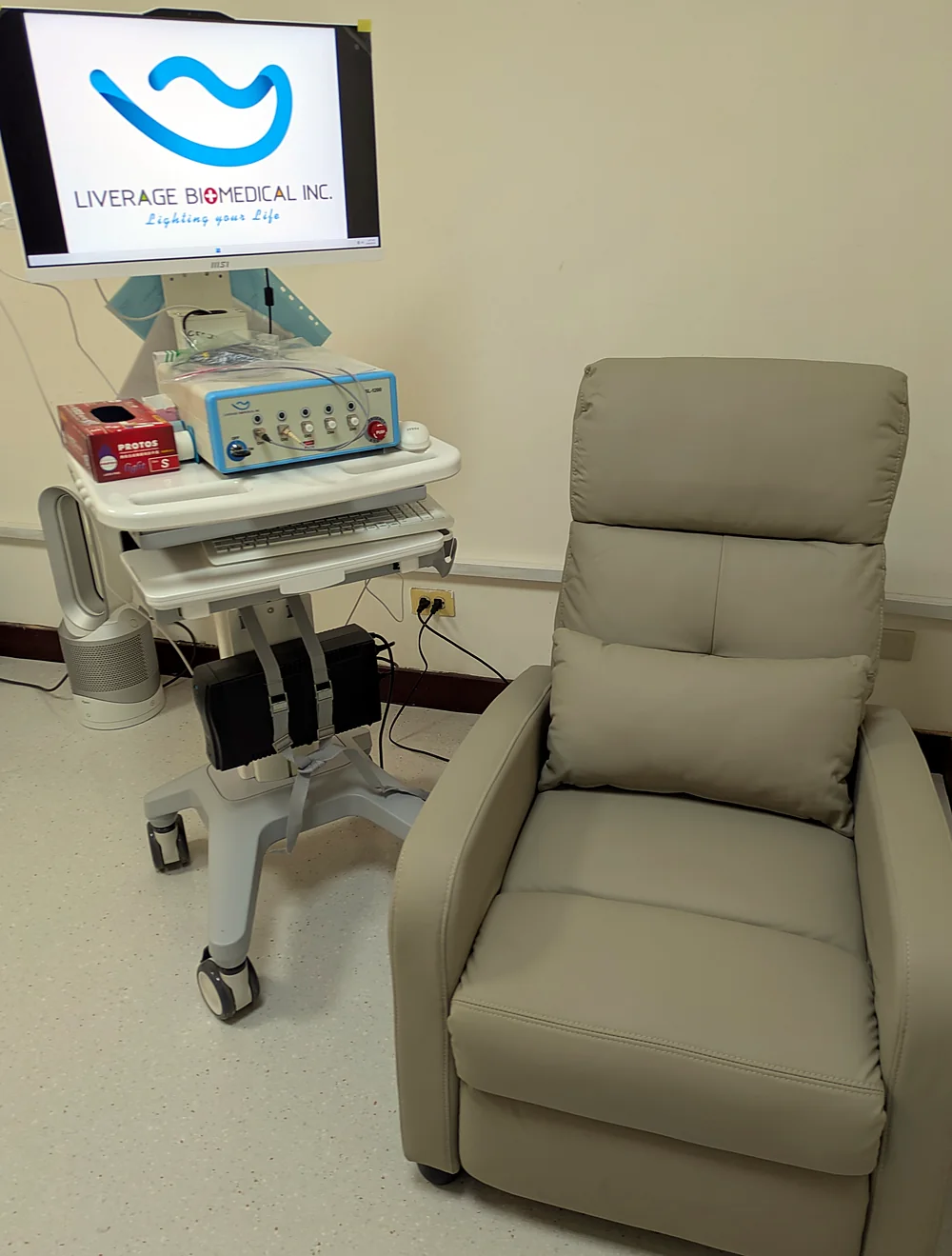
The mechanisms that are inferred
These mechanisms come mostly from cell and animal experiments; how they correspond to what happens in people has not been fully established:
- Red light is absorbed by cytochrome c oxidase in the mitochondria, which may raise ATP production.
- It promotes the release of nitric oxide (NO), causing blood vessels to dilate and improving the microcirculation.
- It raises the activity of antioxidant enzymes and lowers oxidative stress.
- It lowers inflammatory cytokines (IL-1β, IL-6, TNF-α).
- It improves the deformability of red blood cells and reduces platelet aggregation, improving measures of blood rheology.
How strong is the evidence? Please read this section carefully
What can be said at present, and what cannot
What can be said: across a number of studies, ILIB has a good safety record, is well tolerated, and adverse events are rare; in some small randomised trials and observational studies, improvements have been seen in pain scores, fatigue scales, inflammatory markers or measures of blood rheology.
What cannot yet be said: the literature as it stands consists mainly of studies with small samples, a single centre and no long-term follow-up. Review articles point consistently to one key methodological problem — the laser parameters are not standardised across studies, and are often not even reported in full (wavelength, power, irradiation time, total energy) — which means the results cannot be compared with one another and are hard to reproduce. So even where a study shows a benefit, it is hard to be sure that it would be reproduced with a different machine and different parameters.
For that reason, ILIB is at present an “adjunct” and not a “treatment”. It should not replace anything for which there is already clear evidence — blood-sugar-lowering drugs, medicines for nerve pain, rehabilitation and cardiovascular medicines all included.
In Taiwan it is at present not covered by the National Health Insurance (NHI) and is a self-paid item. If you meet claims that it “can treat cancer”, “can replace dialysis” or “can reverse dementia”, be sceptical at once — none of these has any evidence behind it.
Situations where it may be worth discussing
The tiers below are drawn from the quantity and quality of the literature as it stands. Not one of them reaches the level of a “standard treatment”:
| Situation | What the evidence looks like at present | How to regard it |
|---|---|---|
| Diabetic peripheral neuropathy, chronic nerve pain | Several small randomised trials show pain scores improving | Can be discussed as an adjunct |
| Chronic pain, fibromyalgia | Small studies and case series | Can be discussed as an adjunct |
| Chronic fatigue, autonomic dysfunction, sleep quality | Mostly observational, with subjective scales; a placebo effect is hard to rule out | The evidence is weak |
| Recovery after a stroke or a brain injury | Preliminary exploratory studies | The evidence is weak |
| “Wellness” for blood pressure, blood sugar and lipids; anti-ageing; boosting immunity | Mainly surrogate markers, with no clinical outcomes | No conclusion can yet be drawn |
| Treating cancer, replacing dialysis, reversing dementia | — | No evidence; do not believe it |
How is a course of treatment run?
- Transcutaneous: the probe is fixed to your wrist like a watch. The irradiation itself is painless and needs no needle, and you can use your phone or rest with your eyes closed.
- Invasive: an intravenous cannula has to be placed first, much as for an ordinary drip; the irradiation itself is equally free of any particular sensation.
- A session takes about 30–60 minutes, commonly arranged on consecutive days or several times a week, with about 10 sessions to a cycle.
- Afterwards you can usually go straight back to normal activity; no rest and no fasting are needed.
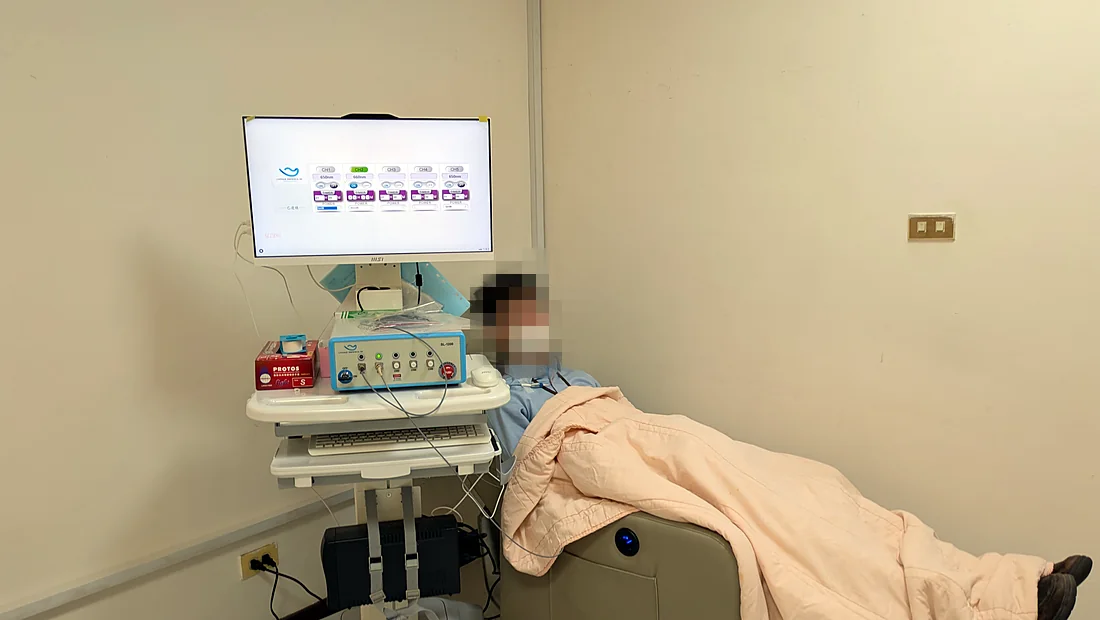
Photographed in this hospital’s treatment room; the person’s face has been de-identified.
When it is not suitable, or has to be discussed first
The overall safety of ILIB is good and absolute contraindications are few, but in the following situations it is better to check with a doctor first:
- Currently taking a photosensitising medicine (some antibiotics such as the tetracyclines, certain diuretics, antiarrhythmic drugs, St John’s wort, drugs used in photodynamic therapy): in theory these increase the risk of a light reaction.
- A tendency to bleed, or taking an anticoagulant or antiplatelet drug: the invasive route needs an intravenous cannula, which carries a risk of bruising or bleeding; with the transcutaneous route the effect is very small.
- An acute infection with fever: better to deal with the infection first.
- Pregnancy: there are no safety data, so it is generally not advised.
- During treatment for a malignant tumour: the effect of photobiomodulation on tumour cells has not been established, so it should be discussed with your oncologist first.
- A wound, an infection or a photosensitive skin disease on the skin itself (such as lupus erythematosus or porphyria): avoid that site, or wait.
- Poor venous access (fine veins, repeated difficulty with cannulation): the transcutaneous route is better.
Reactions that may occur
Most people have no trouble at all. The few reports there are include mild warmth at the site of irradiation, brief tiredness or dizziness after treatment, and bruising at the puncture site with the invasive route. Serious adverse events are rare.
Common questions
Is this “blood washing”? Is blood taken out?
No, and no. ILIB does not take blood out, does not exchange it and does not add anything to it; it only shines low-energy light on the blood. What is commonly called “blood washing” usually means something entirely different — and considerably more contentious — so please do not confuse the two.
Does irradiating the wrist through the skin work as well as irradiating inside the vessel?
Strictly speaking, no. Light applied through the skin has to pass through the skin and the tissue beneath it, so much less energy actually reaches the blood than with irradiation inside the vessel. Both methods appear in the literature, but they are rarely compared directly. If you see a study claiming some effect, check first which method it used and what the parameters were.
Will I feel something straight away?
Most people will not. Some feel after a few sessions that they sleep more deeply or have more energy during the day, but subjective impressions of that kind are very hard to separate from a placebo effect. If you want to judge whether it is working, keep a more concrete record: pain scores, hours of sleep, walking distance — rather than an overall feeling.
Does the NHI cover it? How many sessions are needed?
In Taiwan it is at present not covered by the NHI and is a self-paid item. The common arrangement is about 10 sessions to a cycle. It is worth agreeing with your doctor before you start: how many sessions, what measure will tell you whether it is working, and when you will stop if it does not improve — so that it does not turn into open-ended spending.
Can it replace my current medicines?
No. This is the most important point. The evidence for ILIB is nowhere near strong enough to replace blood-sugar-lowering drugs, medicines for nerve pain, cardiovascular medicines or any existing standard treatment. Treat it as something added on top, not as a substitute.
References
- Potential effect of intravascular laser irradiation of blood (ILIB) in improving physical performance: a narrative review. J Funct Morphol Kinesiol. 2025;10(4):466.
- Influence of intravascular laser irradiation of blood (ILIB) on inflammatory cytokines and nitric oxide in vivo: a systematic review. Lasers Med Sci. 2024.
- The clinical efficacy of intravascular laser irradiation of blood (ILIB): a narrative review of randomized controlled trials. Adv Integr Med. 2025.
- 高雄榮民總醫院復健醫學部. 靜脈雷射治療(ILIB)介紹. Available from: https://org.vghks.gov.tw
References follow the ICMJE (Vancouver) style. Guidelines and official documents are given with their version or year of publication; legislation and National Health Insurance (NHI) rules are given with the responsible authority and the version date. Last checked: 8 October 2026.
Service information at this hospital
What follows is the usual arrangement. The number of sessions and the time per session are the ranges commonly seen in practice, not a promise to any individual patient; the indication, the number of sessions and the cost that actually apply to you depend on assessment in the outpatient clinic and on this hospital’s latest announcements.
- Where it is done
- The treatment room of the Department of Internal Medicine; assessment and follow-up in the chest medicine outpatient clinic
- Hours
- Weekdays 08:30–16:30
- Time per session
- About 30–60 minutes
- Suggested number of sessions
- The common arrangement is about 10 sessions to a cycle, on consecutive days or several times a week.
- Cost and coverage
- Self-paid. Please ask about the actual cost in the clinic.
- How to book
- After assessment in the outpatient clinic, the doctor issues a treatment order and a slot is arranged.
- Preparing for treatment
- Please bring your full medication list, in particular any photosensitising medicine or anticoagulant. If your veins are poor, you can discuss switching to transcutaneous irradiation at the wrist, which needs no needle.
- Contact
- Taipei Veterans General Hospital Hsinchu Branch 03-596-2134 (ask for the treatment unit)
This content is health information. It is for reference only and cannot replace a professional medical diagnosis. Whether this treatment is right for you, and how a course should be arranged, must be decided by a doctor after assessing your individual situation. All of the working behind the interactive tools on this page is done on your own device; your answers are not uploaded and are not stored. This site records only anonymous usage statistics (for example, how many people read this page to the end, how many complete a self-assessment, and which band the result falls into). It does not include what you answered, and it sets no cookies. See the privacy notice for details.
Still have questions? Add Dr. Hwa-Yen Chiu’s LINE official account @chiubreath for clinic news and updates on respiratory health.
Add on LINE